Brand Logo Moneyfacts Group plc
Telephone Icon T: 01603 476476 Email Icon E: enquiries@moneyfacts.co.uk LinkedIn Icon

First-time buyers bear the brunt of mortgage mayhem

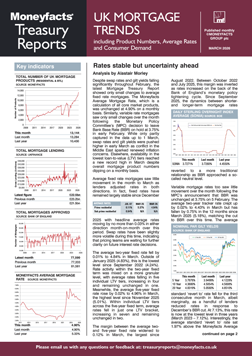
Image of a Moneyfacts Mortgage Treasury Report Image of a Moneyfacts Mortgage Treasury Report Image of a Moneyfacts Mortgage Treasury Report
Rachel Springall, Press Officer
Rachel Springall, Finance Expert 01603 476210 Email Rachel
11/05/2026

First-time buyers bear the brunt of mortgage mayhem

Moneyfacts UK Mortgage Trends Treasury Report data reveals that despite mortgage turmoil easing in April, first-time buyers remain under pressure from reduced choice and stretched affordability.


First-time buyers bear the brunt of mortgage mayhem

Moneyfacts UK Mortgage Trends Treasury Report data reveals that despite mortgage turmoil easing in April, first-time buyers remain under pressure from reduced choice and stretched affordability.


  • Mortgage product choice has contracted by around 10% since the start of March, with higher loan-to-value deals (10% or less deposit or equity) falling by 14%, a blow to first-time buyers in particular.
  • Overall product choice rose month-on-month, up by 583 options, but this represents less than half of the deals lost the month prior (1,283). Lenders pulled products from sale due to uncertainty over the future path of interest rates.
  • Mortgage product churn calmed, the average shelf-life of a deal doubled from eight days to 16 days.
  • Since the start of April, the average two-year fixed rate fell by 0.06%, and the average five-year fell by 0.07%, to 5.78% and 5.68%, but these rates stand higher than at the start of March, 4.84% and 4.96%, respectively.
  • The Moneyfacts Average Mortgage Rate fell for the first time (month-on-month) since January 2026, to 5.66%, but remains higher than at the start of March at 4.90%.
  • The average two- and five-year fixed rates at 95% loan-to-value (LTV) remain above 6%.
  • Fixed rates are still lower than the average ‘revert to’ rate or Standard Variable Rate (SVR). The average SVR remains at 7.13%, down by 0.45% year-on-year from 7.58%. The highest recorded was 8.19% during November and December 2023.


  • Mortgage product choice has contracted by around 10% since the start of March, with higher loan-to-value deals (10% or less deposit or equity) falling by 14%, a blow to first-time buyers in particular.
  • Overall product choice rose month-on-month, up by 583 options, but this represents less than half of the deals lost the month prior (1,283). Lenders pulled products from sale due to uncertainty over the future path of interest rates.
  • Mortgage product churn calmed, the average shelf-life of a deal doubled from eight days to 16 days.
  • Since the start of April, the average two-year fixed rate fell by 0.06%, and the average five-year fell by 0.07%, to 5.78% and 5.68%, but these rates stand higher than at the start of March, 4.84% and 4.96%, respectively.
  • The Moneyfacts Average Mortgage Rate fell for the first time (month-on-month) since January 2026, to 5.66%, but remains higher than at the start of March at 4.90%.
  • The average two- and five-year fixed rates at 95% loan-to-value (LTV) remain above 6%.
  • Fixed rates are still lower than the average ‘revert to’ rate or Standard Variable Rate (SVR). The average SVR remains at 7.13%, down by 0.45% year-on-year from 7.58%. The highest recorded was 8.19% during November and December 2023.


Rachel Springall, Finance Expert at Moneyfacts, said:

“Borrowers may feel partially relieved by the period of calm after absolute mortgage mayhem, but first-time buyers bear the brunt. Lenders slowly brought back deals and shifted to making cuts over hikes during April. Unfortunately, there is much more room for improvement, as the product choice overall is still down by around 10% since the start of March, as less than half the deals lost have returned. First-time buyers will be frustrated to see the choice of higher loan-to-value (LTV) options drop by 14% since the start of March (90%, 95% and 100% LTV).

“The global pressures caused by the conflict in the Middle East completely flipped the expected path of inflation and future rate setting, which caused lenders to pull deals and hike fixed rates. Thankfully, the calm of product churn during April compared to the upheaval in March, resulted in the average shelf-life of a deal returning to a more realistic window, doubling from around a week to just over two weeks (eight days to 16 days).

“First-time buyers or those with little equity of just 5% hoping to grab a two- or five-year fixed deal will find average fixed rates remain above 6%. It is essential that new buyers in particular feel supported, to keep the market moving, but affordability strains are evident. Higher interest rates, the lack of affordable housing and the potential for a spike in the cost of living can all damage the mortgage market. Support and innovation from lenders will be vital to keep the market moving. The strain of high payments will make borrowers consider a longer-term deal, such as for 35 years or 40 years to make initial payments more manageable. However, this means paying more interest overall, so making overpayments where possible to reduce the debt and mortgage term is wise.

“It is understandable to see why affordability for borrowers continues to be stretched, incomes are not stretching far enough to acquire a mortgage and those trapped in the rental cycle struggle to build a sizeable deposit. Over recent years, there has been a rise in the proportion of borrowers taking on a mortgage with a high loan-to-income ratio (LTI). Official data from the Financial Conduct Authority (FCA) of gross advances by income multiples during Q4 2025 revealed that proportion of lending to a single borrower at four times’ income (4x LTI) rose to its highest levels since Q2 2021. As may be obvious, securing a mortgage can be more of a challenge for those going alone, which means any relaxation to loan-to-income rules, such as with building societies like Nationwide with its Helping Hand mortgage at six times’ income, can make all the difference. Seeking advice from a broker is wise to keep abreast of the latest deals and get invaluable advice on affordability constraints.”


Rachel Springall, Finance Expert at Moneyfacts, said:

“Borrowers may feel partially relieved by the period of calm after absolute mortgage mayhem, but first-time buyers bear the brunt. Lenders slowly brought back deals and shifted to making cuts over hikes during April. Unfortunately, there is much more room for improvement, as the product choice overall is still down by around 10% since the start of March, as less than half the deals lost have returned. First-time buyers will be frustrated to see the choice of higher loan-to-value (LTV) options drop by 14% since the start of March (90%, 95% and 100% LTV).

“The global pressures caused by the conflict in the Middle East completely flipped the expected path of inflation and future rate setting, which caused lenders to pull deals and hike fixed rates. Thankfully, the calm of product churn during April compared to the upheaval in March, resulted in the average shelf-life of a deal returning to a more realistic window, doubling from around a week to just over two weeks (eight days to 16 days).

“First-time buyers or those with little equity of just 5% hoping to grab a two- or five-year fixed deal will find average fixed rates remain above 6%. It is essential that new buyers in particular feel supported, to keep the market moving, but affordability strains are evident. Higher interest rates, the lack of affordable housing and the potential for a spike in the cost of living can all damage the mortgage market. Support and innovation from lenders will be vital to keep the market moving. The strain of high payments will make borrowers consider a longer-term deal, such as for 35 years or 40 years to make initial payments more manageable. However, this means paying more interest overall, so making overpayments where possible to reduce the debt and mortgage term is wise.

“It is understandable to see why affordability for borrowers continues to be stretched, incomes are not stretching far enough to acquire a mortgage and those trapped in the rental cycle struggle to build a sizeable deposit. Over recent years, there has been a rise in the proportion of borrowers taking on a mortgage with a high loan-to-income ratio (LTI). Official data from the Financial Conduct Authority (FCA) of gross advances by income multiples during Q4 2025 revealed that proportion of lending to a single borrower at four times’ income (4x LTI) rose to its highest levels since Q2 2021. As may be obvious, securing a mortgage can be more of a challenge for those going alone, which means any relaxation to loan-to-income rules, such as with building societies like Nationwide with its Helping Hand mortgage at six times’ income, can make all the difference. Seeking advice from a broker is wise to keep abreast of the latest deals and get invaluable advice on affordability constraints.”

 

Mortgage market analysis


May-24

May-25

Nov-25

Apr-26

May-26

Fixed and variable rate products

Total product count - all LTVs

6,565

6,993

6,918

6,201

6,784

Product count - 95% LTV

347

462

465

368

436

Product count - 90% LTV

791

876

897

759

871

Product count - 60% LTV

748

786

787

739

791

All products

Shelf-life (days)

28

19

21

8

16

All LTVs

Average two-year fixed rate

5.91%

5.18%

4.94%

5.84%

5.78%

Average five-year fixed rate

5.48%

5.10%

5.01%

5.75%

5.68%

95% LTV

Average two-year fixed rate

6.14%

5.63%

5.41%

6.40%

6.33%

Average five-year fixed rate

5.64%

5.58%

5.41%

6.18%

6.06%

90% LTV

Average two-year fixed rate

6.12%

5.42%

5.24%

6.12%

6.05%

Average five-year fixed rate

5.57%

5.24%

5.16%

5.98%

5.87%

60% LTV

Average two-year fixed rate

5.45%

4.65%

4.43%

5.39%

5.28%

Average five-year fixed rate

5.08%

4.58%

4.67%

5.43%

5.35%

All LTVs

Standard Variable Rate (SVR)

8.18%

7.58%

7.27%

7.13%

7.13%

All LTVs

Average two-year tracker rate

6.12%

5.16%

4.66%

4.69%

4.61%

Data shown is as at the first available day of the month, unless stated otherwise.

Source: Moneyfacts Treasury Reports


Moneyfacts Average Mortgage Rate


May-24

May-25

Nov-25

Apr-26

May-26

Moneyfacts Average
Mortgage Rate

5.75%

5.17%

4.99%

5.72%

5.66%

Calculated from the total of all on-sale, core market, fixed and variable tracker mortgages. Standard exclusions apply: Self-build only, shared ownership only, new build only, shared equity only, standard variable rates and adverse credit

Source: Moneyfacts Average Mortgage Rate.


Mortgage market analysis


May-24

May-25

Nov-25

Apr-26

May-26

Fixed and variable rate products

Total product count - all LTVs

6,565

6,993

6,918

6,201

6,784

Product count - 95% LTV

347

462

465

368

436

Product count - 90% LTV

791

876

897

759

871

Product count - 60% LTV

748

786

787

739

791

All products

Shelf-life (days)

28

19

21

8

16

All LTVs

Average two-year fixed rate

5.91%

5.18%

4.94%

5.84%

5.78%

Average five-year fixed rate

5.48%

5.10%

5.01%

5.75%

5.68%

95% LTV

Average two-year fixed rate

6.14%

5.63%

5.41%

6.40%

6.33%

Average five-year fixed rate

5.64%

5.58%

5.41%

6.18%

6.06%

90% LTV

Average two-year fixed rate

6.12%

5.42%

5.24%

6.12%

6.05%

Average five-year fixed rate

5.57%

5.24%

5.16%

5.98%

5.87%

60% LTV

Average two-year fixed rate

5.45%

4.65%

4.43%

5.39%

5.28%

Average five-year fixed rate

5.08%

4.58%

4.67%

5.43%

5.35%

All LTVs

Standard Variable Rate (SVR)

8.18%

7.58%

7.27%

7.13%

7.13%

All LTVs

Average two-year tracker rate

6.12%

5.16%

4.66%

4.69%

4.61%

Data shown is as at the first available day of the month, unless stated otherwise.

Source: Moneyfacts Treasury Reports


Moneyfacts Average Mortgage Rate


May-24

May-25

Nov-25

Apr-26

May-26

Moneyfacts Average
Mortgage Rate

5.75%

5.17%

4.99%

5.72%

5.66%

Calculated from the total of all on-sale, core market, fixed and variable tracker mortgages. Standard exclusions apply: Self-build only, shared ownership only, new build only, shared equity only, standard variable rates and adverse credit

Source: Moneyfacts Average Mortgage Rate.


Notes to editors

You are welcome to use part or all of this press release, so long as we are sufficiently sourced. We would appreciate a link back to Moneyfactsgroup.co.uk.

Pioneering financial comparison technology for over 35 years, Moneyfacts Group plc is the UK’s leading provider of retail financial product data. Used by virtually every bank and building society in the UK, and supplied to the Bank of England, Financial Conduct Authority, Financial Ombudsman Service, HM Treasury, Prudential Regulatory Authority and UK Finance.

Our expert research team monitors the thousands of mortgages, savings, credit card, personal loan, banking, life, pension and investment products in the UK.

For more information about us please see our key facts.

Broadcast

Our broadcast suite enables our finance experts to appear in-vision for television, and we regularly comment live on national and regional radio.

To arrange an interview for radio or television, please contact our press department. We have an in-house broadcast room.


Notes to editors

You are welcome to use part or all of this press release, so long as we are sufficiently sourced. We would appreciate a link back to Moneyfactsgroup.co.uk.

Pioneering financial comparison technology for over 35 years, Moneyfacts Group plc is the UK’s leading provider of retail financial product data. Used by virtually every bank and building society in the UK, and supplied to the Bank of England, Financial Conduct Authority, Financial Ombudsman Service, HM Treasury, Prudential Regulatory Authority and UK Finance.

Our expert research team monitors the thousands of mortgages, savings, credit card, personal loan, banking, life, pension and investment products in the UK.

For more information about us please see our key facts.

Broadcast

Our broadcast suite enables our finance experts to appear in-vision for television, and we regularly comment live on national and regional radio.

To arrange an interview for radio or television, please contact our press department. We have an in-house broadcast room.


Contact Us If you're looking for extra comment, a chart or more information, then please give us a call. We are always more than happy to help.
Adam French Head of Consumer Finance
Rachel Springall Finance Expert
Caitlyn Eastell Personal Finance Analyst